EBD Newsletter May 2026 | Germany in Europe: More Reliable, but Still Without a Clear Course
Dear readers,
One year after the Merz federal government took office, the results of its European policy mixed. Germany is once again acting more reliably in Brussels, but a real breakthrough has yet to materialize. No comprehensive European policy initiative is expected before the summer; the Chancellor’s speech on Europe is likely to provide the strategic framework only by fall.
At the same time, key debates are gaining momentum. Foreign Minister Johann Wadephul has adopted a stance in favour of more majority decisions and flexible cooperation within the EU. In enlargement policy, particularly with regard to Southeastern Europe, there is growing support for gradual integration into the single market. The debate on the next Multiannual Financial Framework is also gathering pace. Beyond the EU, Monaco’s chairmanship of the Committee of Ministers of the Council of Europe demonstrates the close intertwining of human rights, democratic institutions and the rule of law with Europe’s ability to act. Even symbolic gestures matter: Raising the European flag in Budapest on Europe Day demonstrates a sense of European belonging.
For the EM Germany, this fits into a clear line of argument: Europe needs broad solidarity, the capacity for democratic action, the rule of law, parliamentary oversight, civic participation, and a single market that delivers added value. Following extensive consultation, the EBD Executive Board has presented an update to EBD policy. On June 22, the EBD General Assembly, hosted by the Deutsche Bauernverband, will not only elect a new Executive Board but also discuss and adopt the EM Germany policy with its key priorities. Now the federal government must not only coordinate better, but also lead Europe in a fair and inclusive manner: in a way that is inclusive, transparent, and in partnership with democratic social forces. Be part of it.
Yours sincerely,
Bernd Hüttemann
Secretary General of the European Movement Germany e.V.
#EBDGrafik of the month
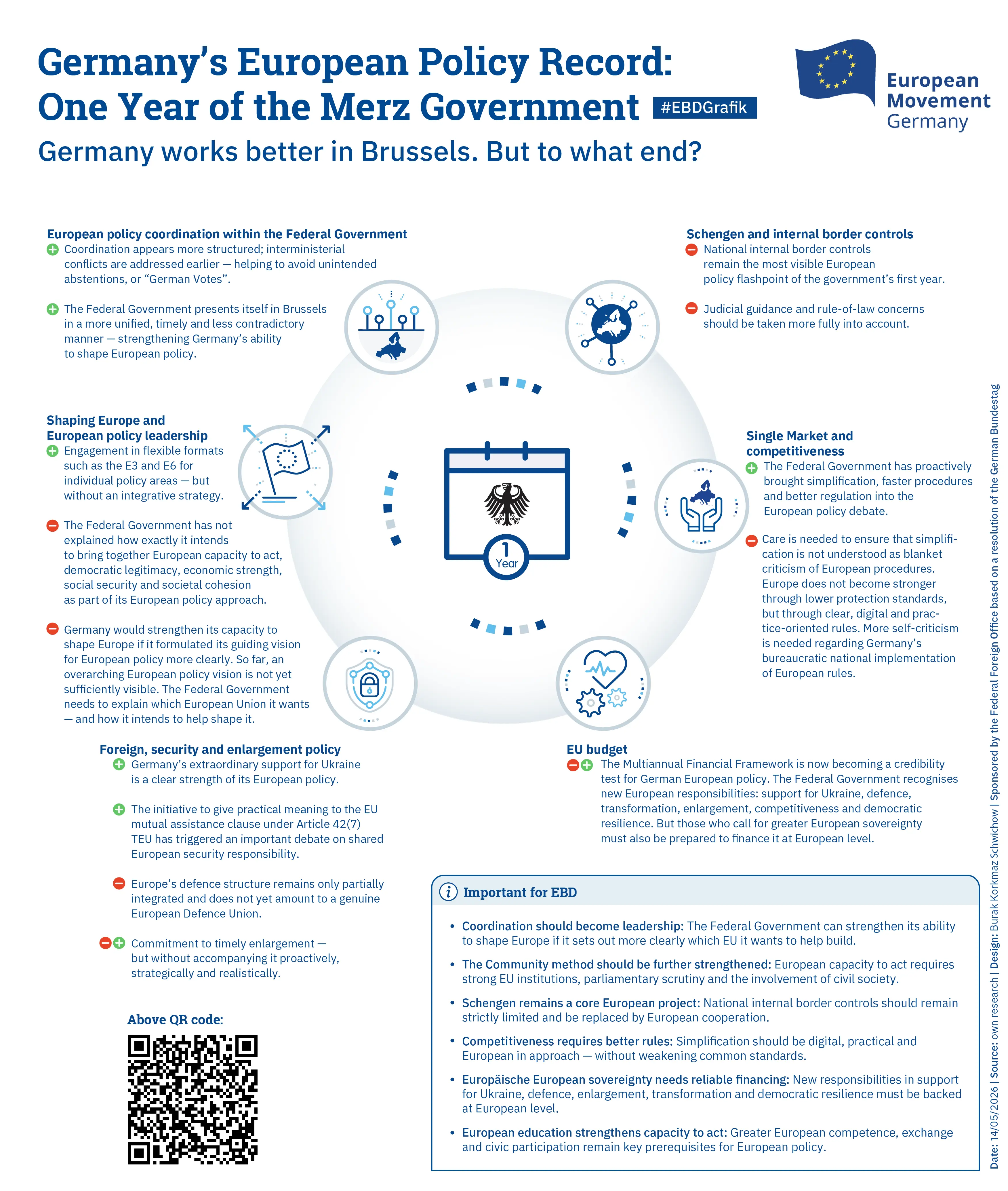
The black-red federal government led by Friedrich Merz has been in office for a year, and its track record is mixed - not only domestically but also at the European level. While Germany is performing better in some areas, the EM Germany analysis reveals that the federal government’s overall role in European policy falls short of expectations.
Our Graphic of the Month shows where progress is being made in Brussels and where it is not. Shortcomings are just as visible as progress, for example in the areas of the single market or Schengen. Overall, the issue is less about individual policy areas and more about the lack of overarching initiatives and a clear German role at EU level. | View the Graphic of the Month
EM Germany News
One Year of the Merz Federal Government: The EM Germany Offers a Mixed Assessment of European Policy
One year after taking office, the EM Germany recognises progress in the coordination of Germany's European policy. Open German blockades have become less frequent, the federal government's coordination appears more structured, and Germany is acting in a more predictable manner in Brussels once again. The EM Germany also views the consistent support for Ukraine positively. However, the EM Germany believes that better coordination alone is insufficient: a clear European policy vision regarding the kind of European Union the federal government aims to shape is still lacking.
In the analysis by the EM Germany Secretariat General, it is emphasized that European leadership must not be permanently shifted to smaller, exclusive government formats. Flexible formats such as E3, E6, or Weimar Plus can help prepare the ground for European unity - but they must not replace the Community method, parliamentary oversight, and the involvement of all member states. The EM Germany also takes a critical view of the continuation of national border controls within the Schengen Area. Open borders are among Europe’s most concrete promises of freedom and should not be undermined by unilateral national actions. | Read more here (in German)
EM Germany Executive Board Prepares 2026/27 Policy Agenda for the General Assembly

A few weeks before the EM Germany General Assembly, the Executive Board of the European Movement Germany addressed current developments in European policy and the political framework for the coming year. Topics discussed included the European policy record of the Merz federal government, political developments in several EU member states, and the upcoming negotiations on the Multiannual Financial Framework for 2028–2034. Issues of European governance and legislation also played a role.
A key focus was the preparation of the EM Germany's policy and priorities for 2026/27. Following a consultation process with the Executive Board and member organizations, the Board unanimously adopted the relevant draft resolutions, which will be submitted to the General Assembly in June for a final decision. Bernd Hüttemann also reported on the EM Germany's current activities. Judit Hercegfalvi, the new head of the European Parliament’s liaison office in Berlin, attended the meeting in person for the first time. | Read more here (in German)
Two Perspectives on Europe: 2026 Women of Europe Award Presented
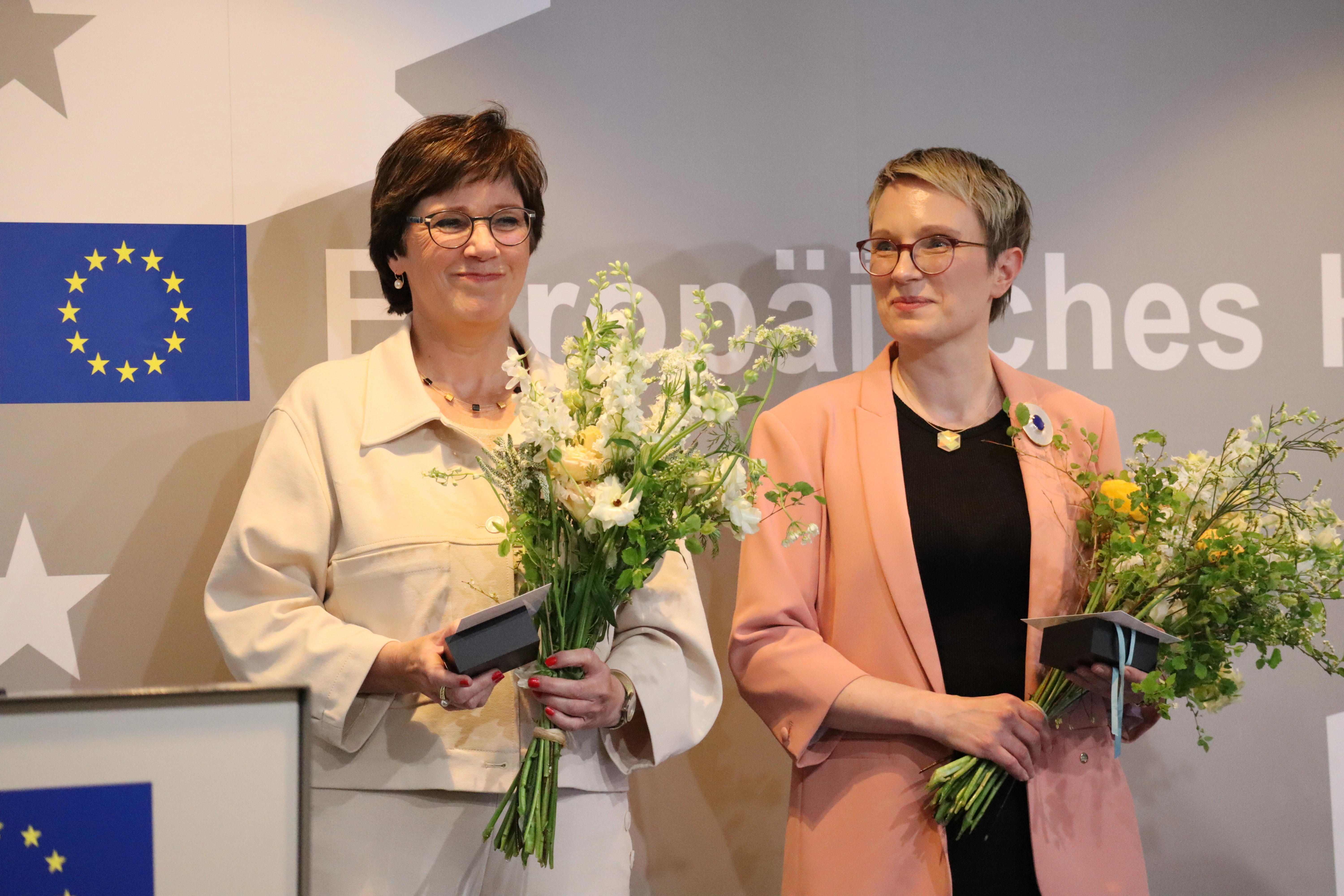
On May 4, the EM Germany honored Ina Rumiantseva and Prof. Dr. Gabriele Abels, two women who are helping to shape Europe in very different ways. While Rumiantseva, as the voice of the Belarusian diaspora, has been advocating for political prisoners and democratic prospects in Belarus for years, Prof. Dr. Abels combines academic work with dialogue on European policy and educational initiatives. The award highlighted the diversity of women’s commitment to democracy, human rights, and European understanding today.
The award ceremony at the European House in Berlin took place in cooperation with the European Commission Representation in Germany and was moderated by Lisi Maier. Barbara Gessler, representative of the European Commission in Germany, and EM Germany President Dr. Anna-Maija Mertens paid tribute to the achievements of the award recipients; laudatory speeches were delivered by Dr. Anna Lührmann, Member of the German Bundestag, and Armin Laschet, Member of the German Bundestag. Their remarks highlighted how much social dialogue and democratic participation depend on the commitment of individual leaders. | Read more here (in German)
Europe Seeks New Approaches to Investment and Market Supervision
The digital EM Germany ECOFIN De-Briefing on May 7 focused on how investment, market supervision, and fiscal policy cooperation in Europe should evolve. Ines Schlotter (Federal Ministry of Finance) provided the German government’s perspective on the outcomes of the latest discussions by the Economic and Financial Affairs Council and the Eurogroup.
Topics discussed included the package on market integration and supervision within the framework of the European Savings and Investment Union, financial support for Ukraine, and current Franco-German investment initiatives. It became clear that while member states support progress toward the integration of EU capital markets, they continue to hold differing views on the future structure of European market supervision. Issues related to the Recovery and Resilience Facility, as well as cybersecurity and artificial intelligence in the financial sector, were also addressed. | Read more here (in German)
74,938 young voices for Europe
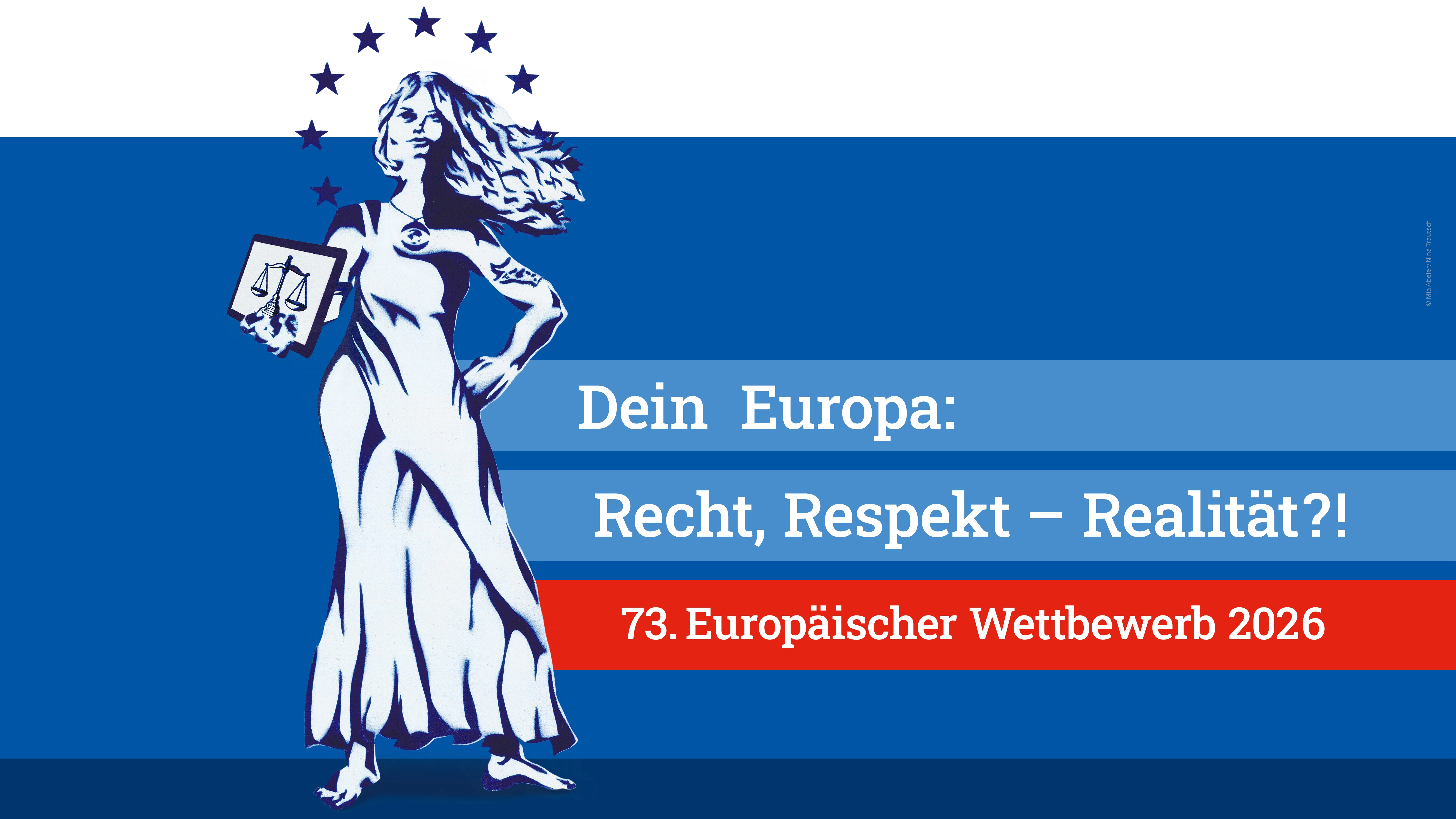
The 73rd Europäischer Wettbewerb has come to an end – even though the award ceremonies in the federal states will continue into the summer. With nearly 75,000 participants from 1,274 schools, Germany’s oldest school competition on European political education recorded its highest participation since 2020. Under the motto “Your Europe: Rights, Respect – Reality?!”, students creatively explored European values, democracy, human rights, and social cohesion.
Through images, songs, poems, and short films, they developed their own perspectives on the future of Europe and expressed both current challenges and personal experiences. The high participation of students from all over Germany as well as from German schools abroad demonstrates the importance of education on European politics even across national borders. | Read more here (in German)
The European Commission is increasingly turning away from X
The European Commission is placing greater emphasis on open networks such as Mastodon and Bluesky. Even though X continues to maintain the illusion of having a wide reach, more and more stakeholders are seeking new avenues for digital public discourse. The European Movement Germany is also seeking solutions to strengthen democratic dialogue and European networking beyond the major U.S. and Chinese platforms, whose algorithms are increasingly hindering open debate. New initiatives demonstrate that open and decentralized communication spaces are possible and are gaining significance not only in Europe.
Particularly exciting in this context is the open AT protocol, which enables interoperability rather than new closed platforms, including integration with the U.S. platform Bluesky. While Eurosky focuses primarily on European infrastructure and hosting, W Social is currently positioning itself as a visible European platform alternative to X. Both approaches demonstrate: Europe is no longer just discussing regulation, but increasingly also its own digital agency. The fact that the U.S. platform Bluesky also relies on decentralized models makes it clear: This is not about “Europe only,” but about open principles, fair rules, and democratic control.
For the EM Germany, it reimains crucial that digital spaces promote democratic exchange, transparency, and European diversity. We are closely monitoring these developments, maintaining dialogue with stakeholders in the emerging European social web ecosystem, and will, of course, keep you informed. What are your experiences?
EBD Mourns the Loss of Dr. Thomas Jansen
We mourn the loss of Dr. Thomas Jansen, who passed away on May 6, 2026, at the age of 86. As a political scientist, journalist, and practitioner of European policy, he shaped the work of European integration for decades. He made a lasting impact on Europa-Union Deutschland, the International European Movement, the European People’s Party, and the European Economic and Social Committee. As a Christian Democrat and European, he consistently advocated for strengthening the liberal-democratic center. It was precisely for this reason that he strengthened the European Movement as a unifying, cross-border network of democratic social forces.
Dr. Thomas Jansen was closely associated with the EM Germany; particularly in the 2000s, he provided important impetus for its reorientation as a modern European policy network. With his passing, we lose a wise mentor, a bridge-builder, a moderate, and a committed European. Our condolences go out to his family and to all those who were connected to him personally and through European politics.
#Nachgefragt bei...

In this edition of the “Nachgefragt bei…” series, we speak with the Ambassador of the Principality of Monaco to Germany, H.E. Lorenzo Ravano. On May 15, Monaco assumed the chairmanship of the Committee of Ministers of the Council of Europe. Based in Strasbourg, the Council of Europe has been committed to promoting human rights, democracy, and the rule of law in Europe since 1949.
Against this backdrop, Ambassador Ravano discusses the priorities of the Monegasque Chairmanship—including the European Convention on Human Rights, the strengthening of democratic institutions, and the Council of Europe’s response to Russia’s war against Ukraine. Our new EM Germany-Graphic also provides a concise overview of the Chairmanship’s priorities and plans.
The European Convention on Human Rights forms the foundation of the Council of Europe’s work. At the same time, its implementation is under pressure in some member states. How can its effectiveness be safeguarded in the long term, also within the framework of Monaco’s presidency?
H.E. Lorenzo Ravano: In conformity with the functioning rules of the Committee of Ministers, Monaco assumed from December 2025 to May 2026 the Presidency of the Committee for the supervision of execution of ECHR’s cases. In this regard, Monaco permitted the closure of the monitoring of hundreds cases. At the same time, we could deal with various major cases. Among them, we can underline the first examination of the interstates cases Ukraine and The Netherlands vs. Russia which was related to the flight MH17 which was shot down in 2014 in Donbass and the systematic human rights violations in the occupied regions of Ukraine. It allowed a first exchange of views on this case and the identification of the first topic in June 2026 related to the abduction and transfer to Russia of Ukrainian children. The purpose is to maintain a permanent dialogue with the Member States in order to facilitate the implementation of the cases. It is also necessary to recall that, in 2025, 949 cases were implemented (+6,1% in comparation with 2024).
Read the full interview with H.E. Lorenzo Ravano here
Upcoming Events
May 28, 2026 | EM Germany De-Briefing AGRIFISH
What new directions is the EU currently setting in agricultural and fisheries policy? The EM Germany De-Briefing AGRIFISH on May 28 will focus on the outcomes of the Agriculture and Fisheries Council meeting held on May 26. Dr. Andreas Flach (Federal Ministry of Agriculture, Food, and Regional Identity) will provide an overview of the discussions from the perspective of the Federal Government. | Further information (in German)
June 4, 2026 | Brussels Alumni Stammtisch Special with POLITICO
The “Brussels Alumni Stammtisch” event series is back for another round, this time in collaboration with POLITICO. This special edition brings together former Brussels insiders in Berlin for an informal exchange. In addition to discussions on current developments in European politics, a surprise guest has been announced. | Further information (in German)
June 5, 2026 | EP Rapporteur in Dialogue: MEP Gaby Bischoff on Social Security Systems for Cross-Border Workers
Approximately 40 million people live or work across borders within the European Union. A reform of the Regulation on Coordination of Social Security Systems aims to establish more uniform rules in areas such as unemployment insurance, family benefits, and long-term care. At our event, Gaby Bischoff, MEP, will speak about the trilogue agreement reached in April 2026 and her experiences from the negotiations on the reform. | More information will follow soon on our website
June 22, 2026 | EM Germany De-Briefing European Council
Just ahead of the EM Germany General Assembly, the EM Germany will review the outcomes of the European Council meeting held on June 18 and 19. At the Deutscher Bauernverband's Haus der Land- und Ernährungswirtschaft current European policy developments and decisions from the summit will be analyzed together with Ole Funke (Federal Chancellery) | Further information (in German)
June 22, 2026 | EBD General Assembly 2026
The General Assembly of the European Movement Germany will take place on June 22. Once a year—this time at the Haus der Land- und Ernährungswirtschaft, hosted by member organization the Deutscher Bauernverband —the member organizations of the EM Germany gather there to discuss European policy priorities and the network’s strategic direction. The agenda includes, among other items, the adoption of the EM Germany Policy 2026/27 and the election of the EM Germany Executive Board. | Further information (in German)
Check out former editions of our newsletter here.
Please sign up here if you would like to receive the newsletter (in German).
Zur deutschen Version dieses Newsletters.